DESCRIPTION
Since the early 2000s, technological advancements have driven major productivity gains in virtually every major industry. Residential construction, however, remains largely unchanged. The industry has experienced minimal productivity growth over the past several decades, even as housing affordability has worsened amid a persistent shortage of housing supply.
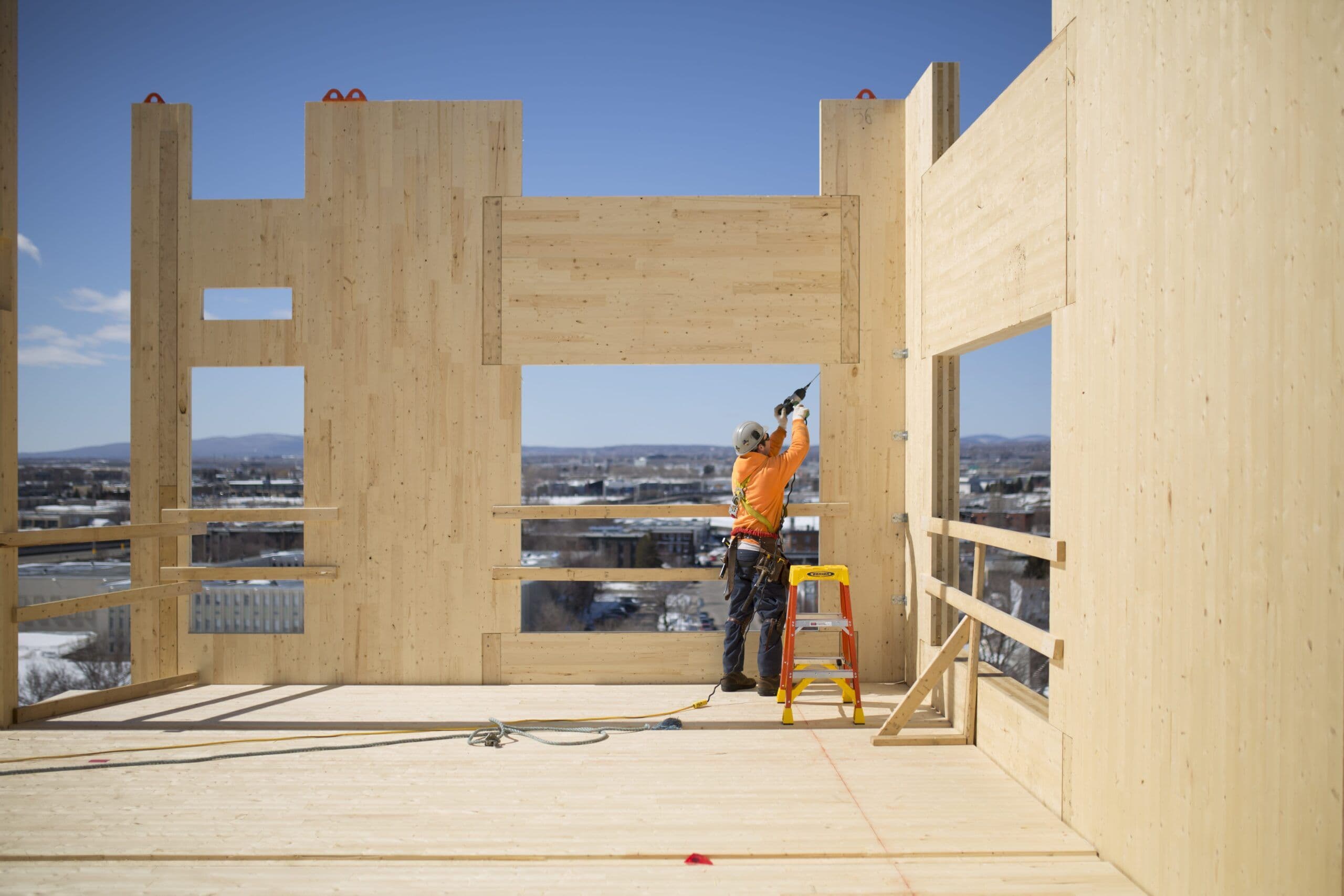
This does not mean that new ways of building do not exist. Factory-built, panelized, and modular construction can move portions of the building process into controlled manufacturing environments. Panelized systems can reduce on-site labor and construction time. Automation and robotics can streamline individual tasks, while new materials and building systems can reduce waste, embody carbon, improve energy performance, or simplify installation.
Your challenge is to propose an innovative construction or design solution that removes a specific barrier preventing a more productive building method, material, or system from reaching broader adoption. The focus is not simply on inventing a new way to build; your starting point should be a specific obstacle that prevents a better way of building from being used at scale.
CONTEXT
The U.S. Department of Energy’s Industrialized Construction: The Case for Modular highlights the potential for industrialized construction to improve productivity and material efficiency, overlap factory production with site work, reduce weather-related delays, and generate cost and schedule savings. The DOE also points to potential benefits in waste reduction, building quality, and energy performance. Yet technologies that appear promising on paper have often struggled to reach widespread adoption. In 2024, modular and panelized construction together accounted for only about 3 percent of completed single-family homes under the Census Bureau definitions analyzed by the National Association of Home Builders, despite decades of interest in off-site construction.
The lack of adoption of these solutions by the homebuilding industry can be attributed to several factors. For one, building a home requires coordination among developers, architects, engineers, manufacturers, general contractors, subcontractors, suppliers, lenders, insurers, building officials, utilities, and others. A new technology can improve one piece of the process while creating difficulties somewhere else.
A factory-built system may save labor but require expensive transportation or cranes. A new material might perform well but face inconsistent code approvals. A manufacturer may need standardized designs and predictable demand to operate efficiently while developers want flexibility from project to project. A new component may not integrate easily with conventional trades or building systems. Builders may also be reluctant to take on the cost and risk of changing processes that they already understand.

The U.S. Department of Housing and Urban Development’s Offsite Construction for Housing Research Roadmap identifies barriers spanning regulation and standards, finance and insurance, project delivery, workforce, and business models, illustrating that scaling construction innovation involves much more than proving that a technology works. Recent industry experience reinforces this point. At HUD’s 2025 Industrialized Housing Summit, participants discussed challenges ranging from state-by-state building requirements and local zoning to the operational knowledge needed to run factories efficiently.
Your solution might address:
- Manufacturing or factory efficiency
- Fragmented supply chains or procurement
- Transportation and on-site installation
- Interoperability between new and conventional building systems
- Labor or workforce requirements
- Standardization and customization
- Code compliance or technical approval
- Material waste or reuse
- Coordination between design, manufacturing, and construction
- Another specific barrier to widespread adoption
You do not need to redesign the entire housing construction industry. In fact, a focused solution to one specific bottleneck may be more practical and scalable than an idea that attempts to solve every challenge at once. The goal is to identify what is standing between a better way of building and widespread adoption and develop a practical way to remove that barrier.
Need help making your presentation? Read our 2026 Pitch Deck Template.
QUESTIONS TO CONSIDER
- What is the barrier? Clearly explain what prevents the existing method, material, or technology from scaling today.
- How does your solution overcome it? Describe the product, system, process, or design intervention you are proposing.
- Where does it fit into the construction process? Explain how it interacts with existing development, design, manufacturing, site work, or construction workflows.
- Who needs to participate? Identify the builders, manufacturers, suppliers, trades, regulators, designers, or other stakeholders necessary for implementation.
- What does it save? Quantify the potential effect on construction cost, time, labor, material use, waste, energy consumption, or another meaningful measure.
- How does it improve housing affordability? Be specific about how the efficiency you create could ultimately reduce the cost of producing or occupying housing.
- Can it scale? Consider what happens when your solution moves from one prototype or project to hundreds or thousands of homes.
HOW TO SUBMIT
STEP 01
Get the Right Format and Length
Make sure your slides are formatted as a PDF. Ensure your presentation is 3 minutes or less.
See the RubricSTEP 02
Submit Your Presentation
Upload and submit your presentation before 8:45 AM MT. If you have any trouble join the office hours Zoom from 7:45-8:45 AM MT.
Submit PresentationSTEP 03
Get Ready to Present to Our Judges & Experts
Your team must be on the competition Zoom to present at 9:30 AM MT. The presentation order will be available in a Google Sheet shared with all participants.
STEP 04
Tune in for the Awards Announcement
The awards announcement will take place at 1:30 PM MT.